Eastern, semi-western, western — three grips, one bevel apart from each other, and a surprisingly heated debate among tennis parents. Here’s the honest breakdown: what each grip actually does, who it suits, and when (if ever) your kid should switch.
The quick answer
For most juniors aged 10–16, semi-western is the right default. It’s what the modern game is built on: heavy topspin, margin over the net, and the ability to handle the pace other juniors hit. Eastern is a fine starting grip for small kids. Full western is a specialist choice, not a starting point. That’s the whole debate in three sentences — but the details matter, so let’s go grip by grip.
Eastern forehand (bevel 3): the classic
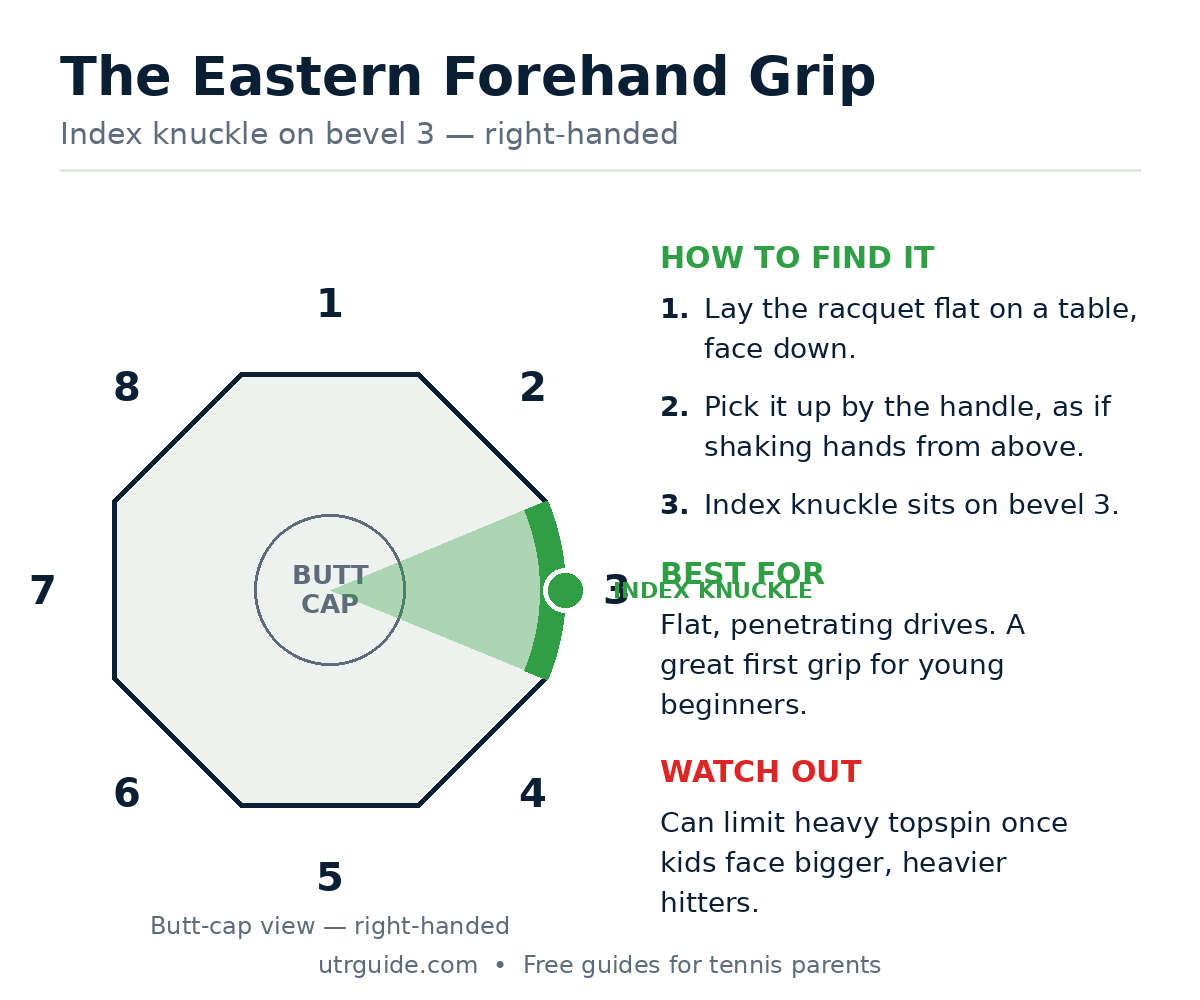
What it does: The racquet face is naturally square at contact, so the ball comes off flat and penetrating. Timing feels simple. Kids “find” the sweet spot quickly, which is why coaches still teach it to beginners.
Strengths: Great on low balls. Easy to flatten out short balls and attack. Simple to learn — confidence comes fast.
Limitations: Topspin takes deliberate work. As opponents hit heavier, the flat ball lands shorter in the court and sits up. Most players who stay eastern forever end up needing exceptional timing to compete at higher levels.
Best for: Kids under 10, late starters who need quick success, and naturally flat hitters.
Semi-western (bevel 4): the modern standard
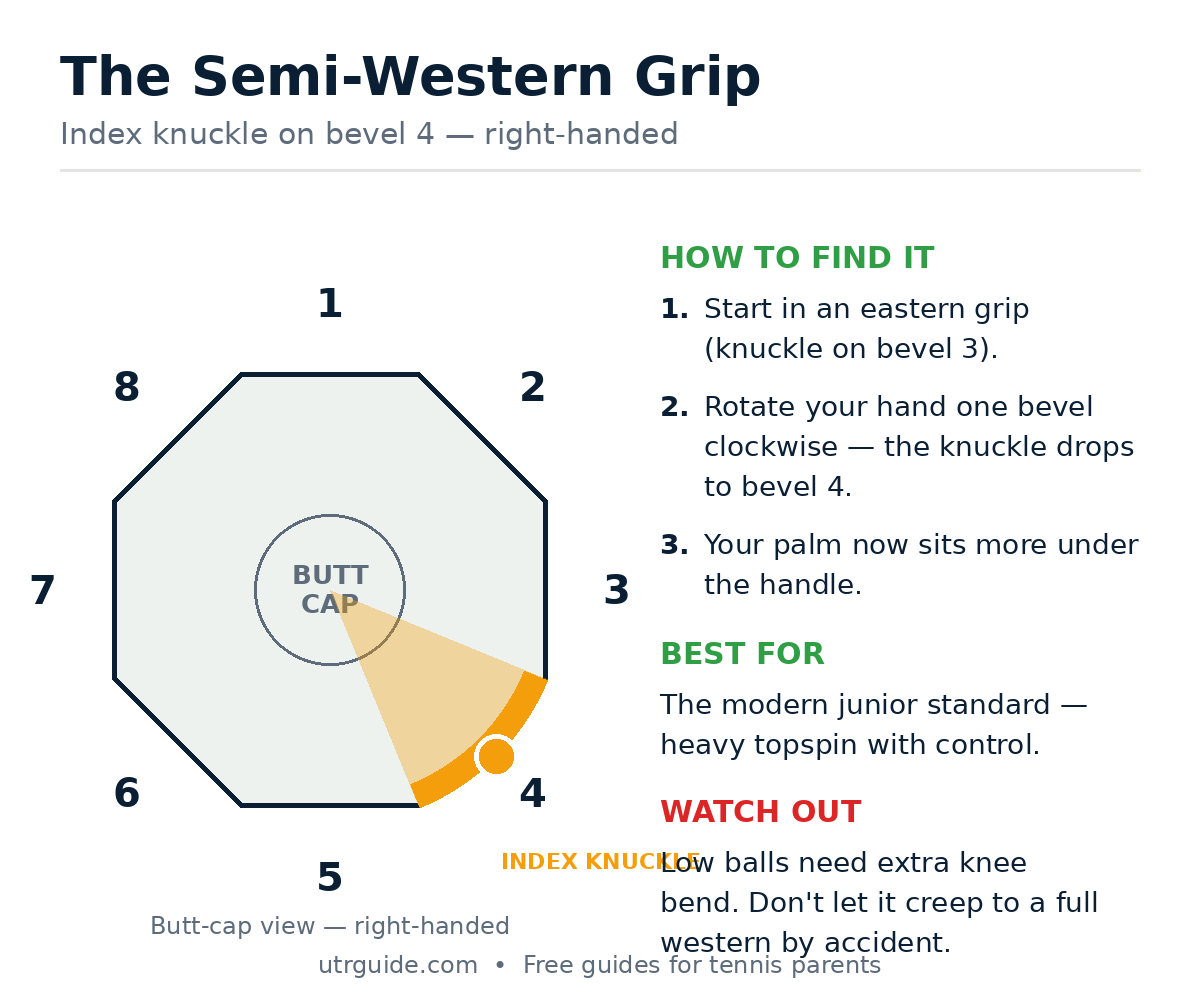
What it does: The palm rotates under the handle, closing the face slightly. The natural swing path brushes up the back of the ball — topspin becomes the default, not a trick. The ball dips hard and kicks up off the bounce.
Strengths: Margin for error. Your kid can swing big and the spin brings the ball down. Handles the heavy pace of modern junior tennis. Still versatile enough for flatter shots when needed.
Limitations: Low balls — especially skidding slices — require real knee bend. Changing to it from eastern feels alien for 2–4 weeks.
Best for: The vast majority of juniors 10 and up. If your kid has one forehand grip for the next five years, make it this one.
Western (bevel 5): the extreme
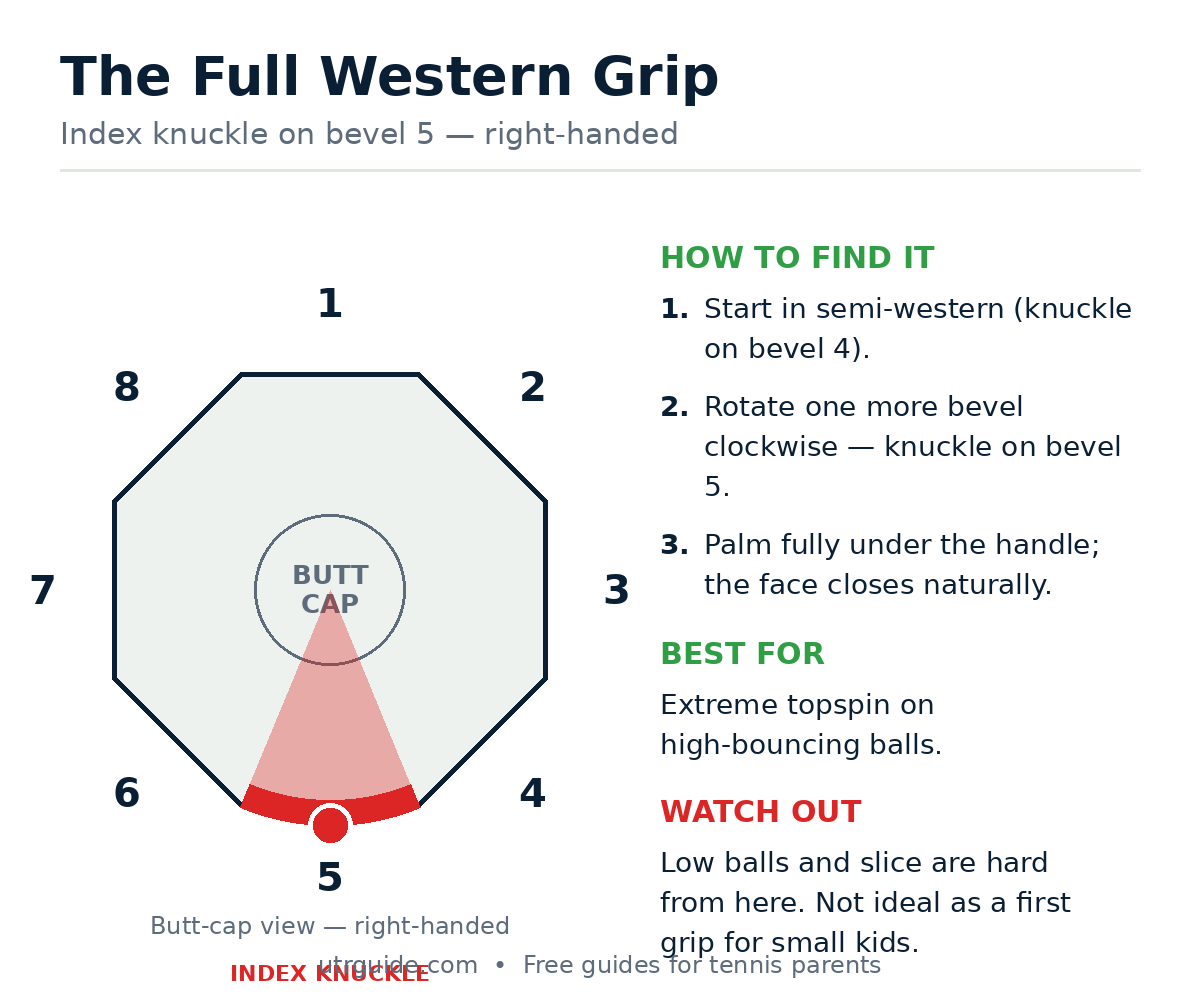
What it does: Palm fully under the handle, face well closed. Generates enormous topspin — the ball loops high and drops like a stone. On high-bouncing surfaces it’s devastating.
Strengths: Nothing handles shoulder-high balls better. Huge safety margin when there’s time to set up.
Limitations: Low balls are genuinely miserable. Slice and defensive shots suffer. Serve returns against big servers get rushed. It narrows a player’s options more than parents expect.
Best for: Kids who naturally gravitate to it and play mostly on clay or slow hard courts — and even then, only after the fundamentals are solid.
Head-to-head comparison
- Topspin: Western > Semi-western > Eastern
- Low balls: Eastern > Semi-western > Western
- Ease of learning: Eastern > Semi-western > Western
- Handling heavy pace: Semi-western > Western > Eastern
- Versatility: Semi-western > Eastern > Western
When should a junior switch grips?
Eastern → semi-western: The most common and most sensible switch. Consider it when your kid is around 10–12, rallying consistently, and starting to get pushed around by heavier hitters. Do it in the off-season. Expect 3–6 weeks of “this feels weird” before it clicks — that’s normal, not a sign the switch was wrong.
Semi-western → western: Rarely necessary. If a coach suggests it, ask why — the answer should be about the kid’s specific game (e.g., a clay-court grinder who lives off high balls), not fashion.
Any switch mid-season: Don’t. Grip changes cost matches for a month. Schedule them when results don’t matter.
The parent’s role
Notice, don’t nag. If you learn the bevel check from our 60-second grip finder, you can quietly monitor whether the grip is stable or drifting. But the switch decision belongs to the player and their coach. Your job is patience during the awkward weeks — that’s when most kids (and parents) panic and switch back, right before it would have clicked.


Leave a Reply