You don’t need to be a coach to identify your kid’s forehand grip. You need 60 seconds, a racquet, and one landmark: the index knuckle — the big knuckle at the base of the index finger. Wherever that knuckle sits on the handle’s eight bevels tells you the grip. Here’s exactly how to check.
Step 1: Learn the bevels (15 seconds)
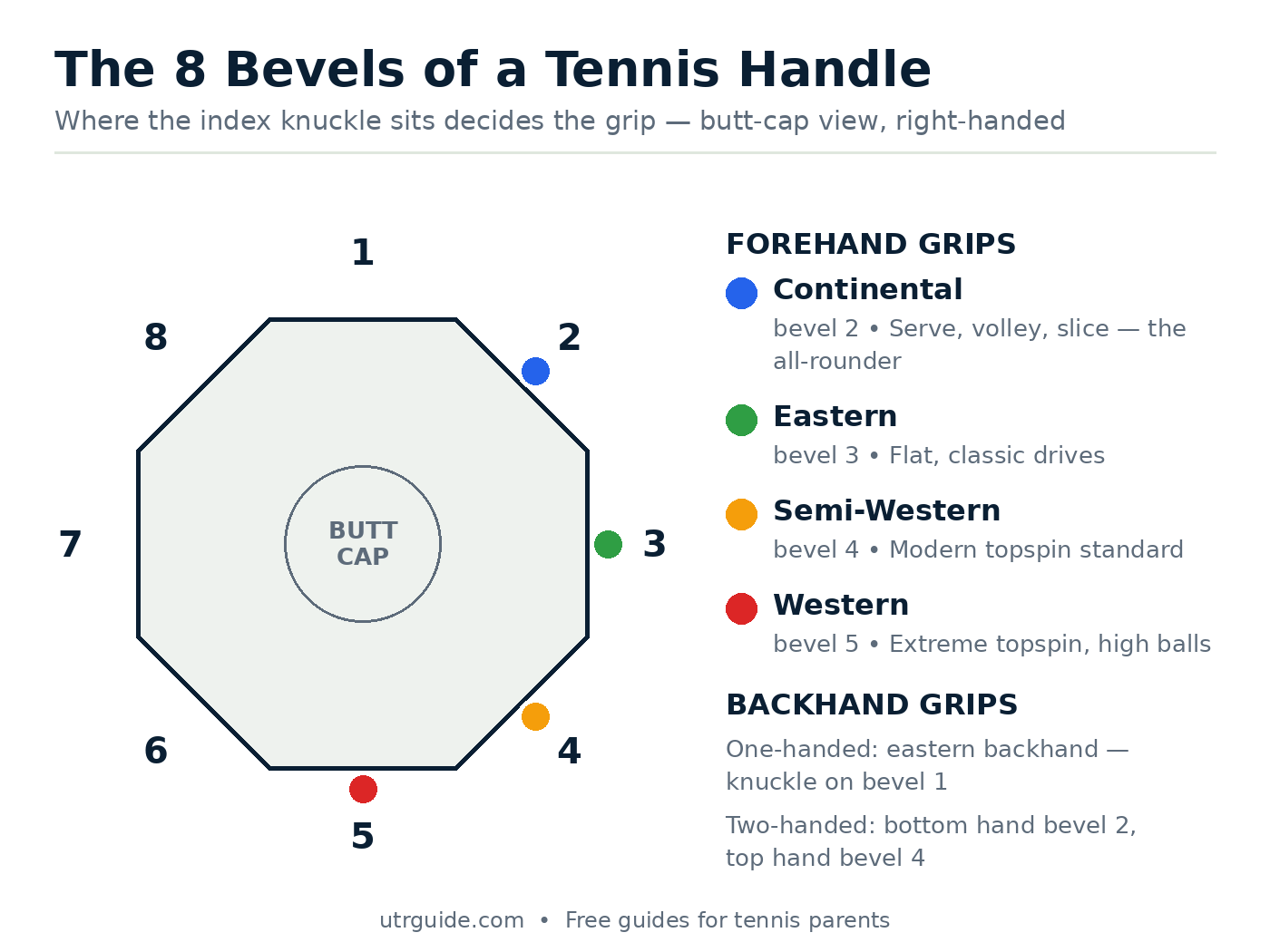
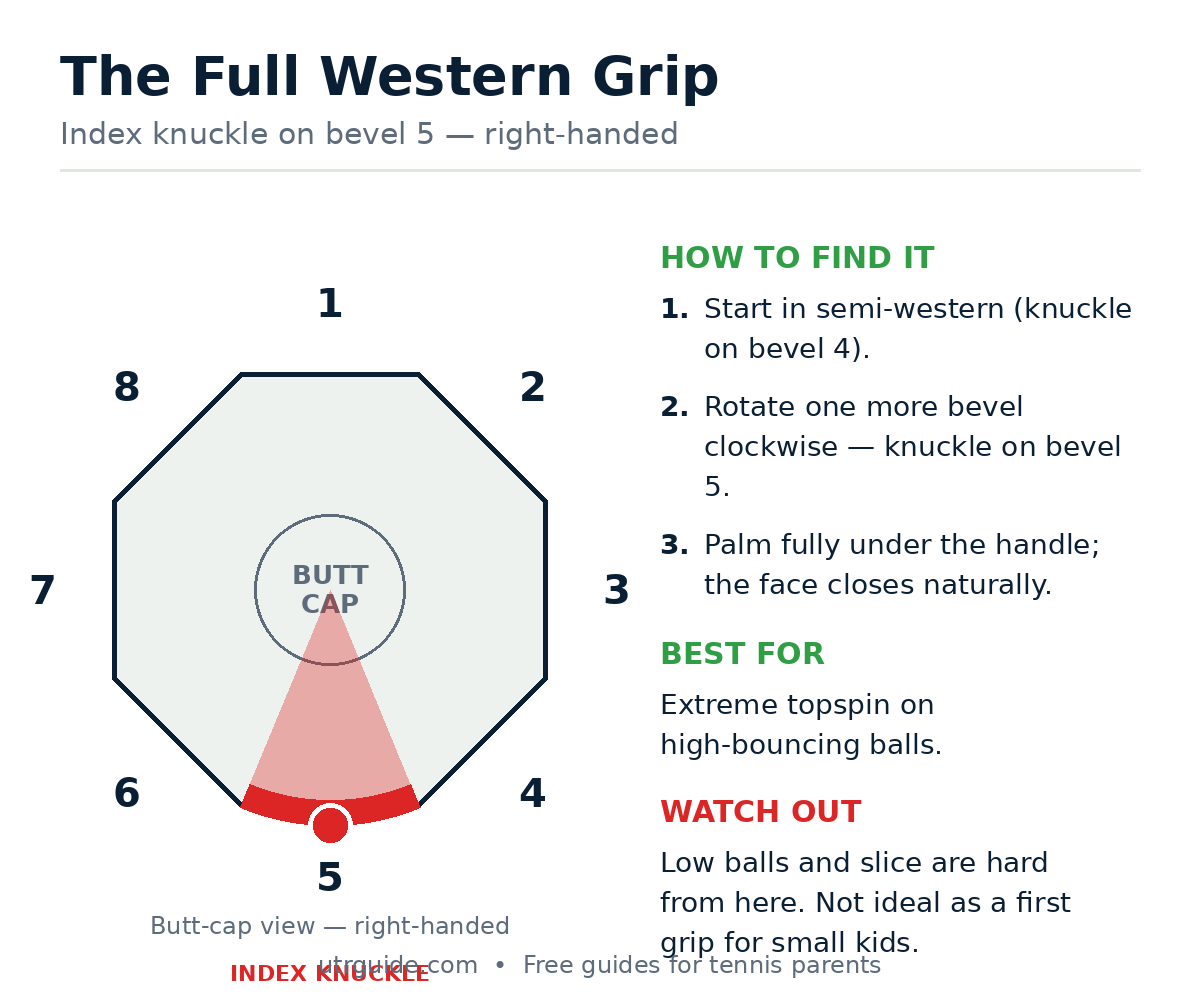
Hold the racquet out in front of you with the head perpendicular to the ground, and look at the butt cap. The handle is an octagon. The flat edge on top is bevel 1; the numbers run clockwise for a right-handed player. The four that matter for forehands are 2, 3, 4, and 5.
Step 2: Find the index knuckle (15 seconds)
Have your kid take their normal ready position with a forehand grip. Now look at the base of their index finger — the knuckle. Which numbered bevel is it resting on? Don’t guess from the palm or the fingers; the index knuckle is the standard landmark every coach uses, and it’s the one that doesn’t lie.
Step 3: Read the result (30 seconds)
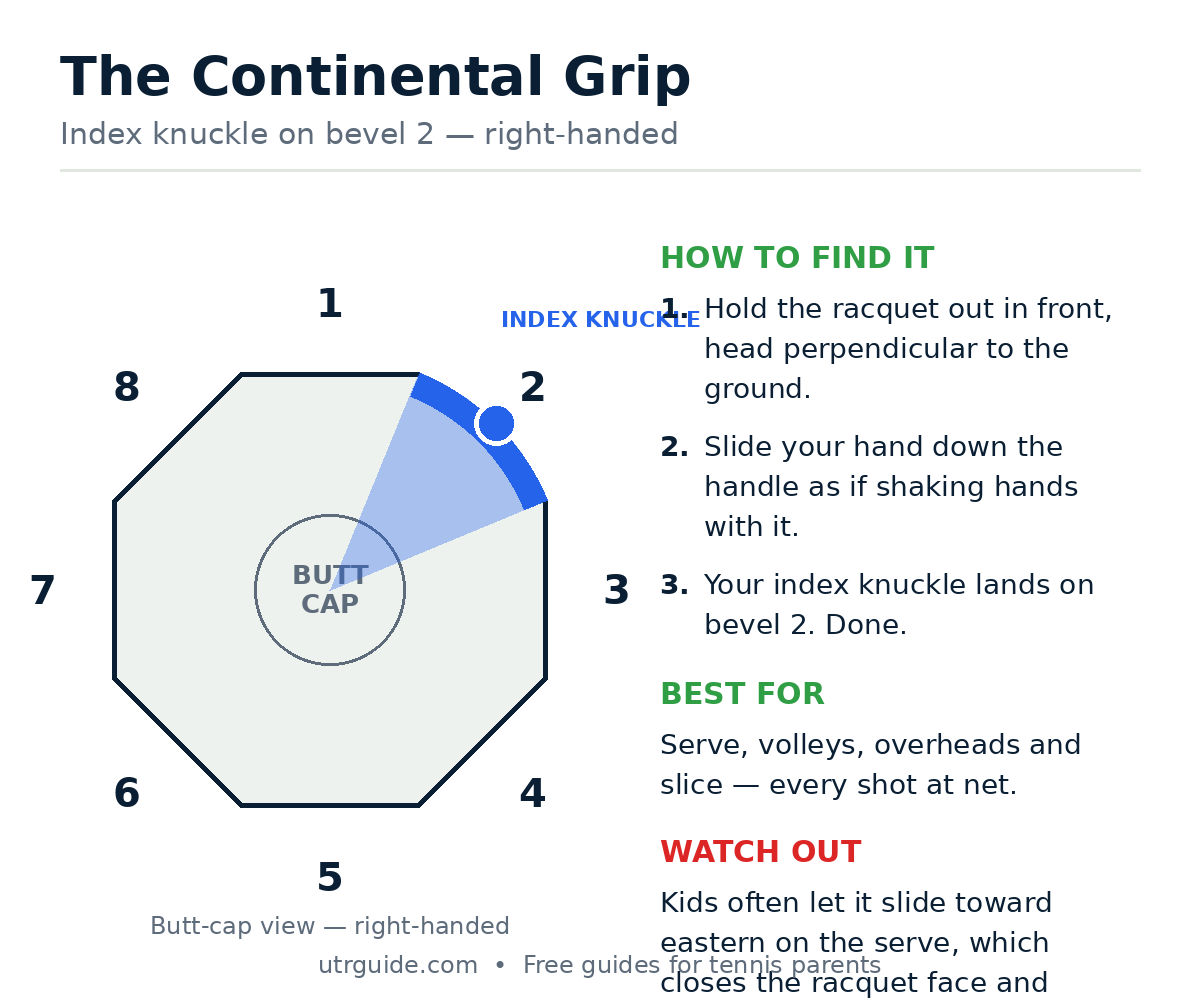
Knuckle on bevel 2 — Continental. The handshake grip. Fine for serves and volleys, but if this is their forehand grip, they’ll struggle to generate topspin from the baseline.
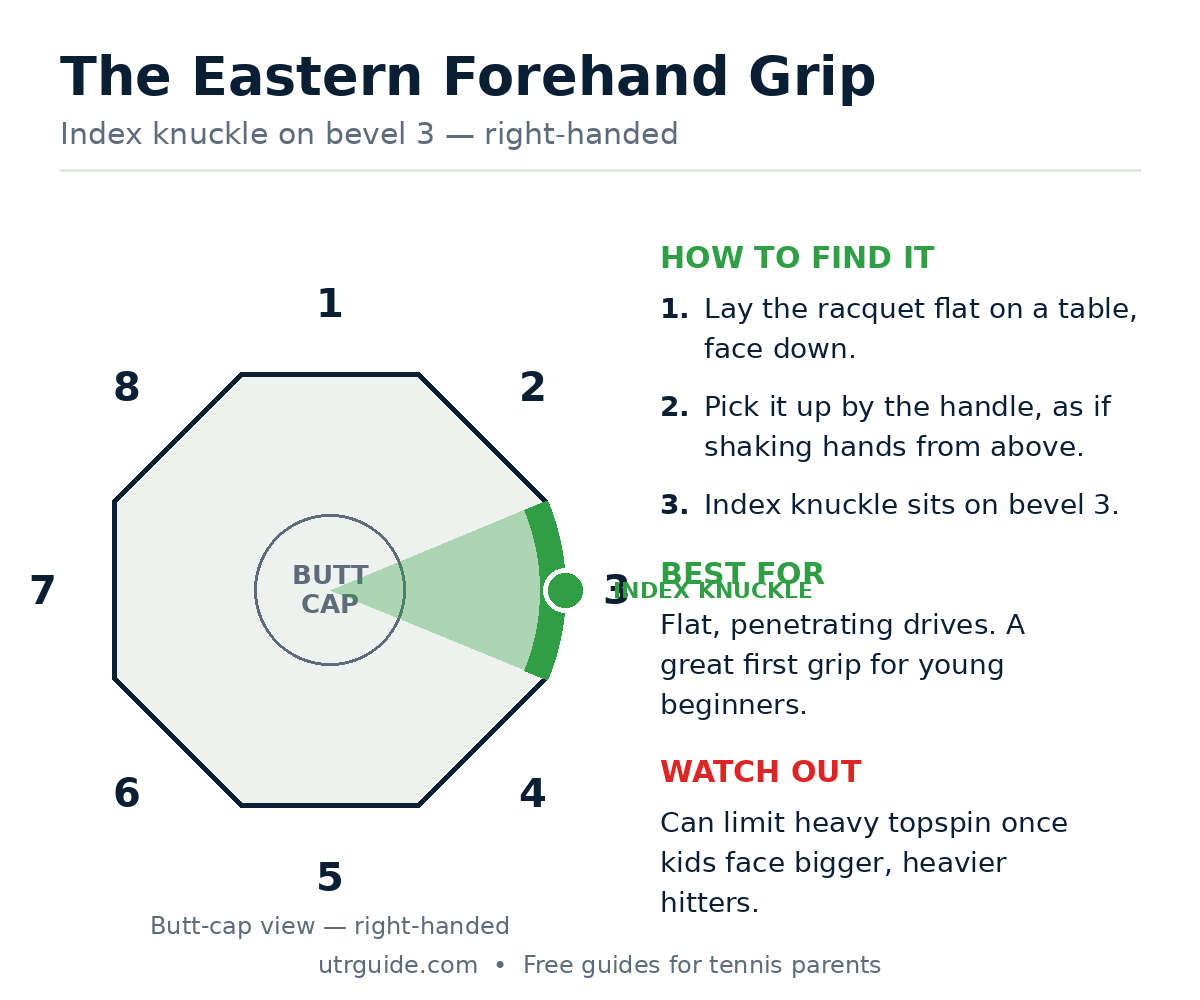
Knuckle on bevel 3 — Eastern forehand. The classic flat-hitting grip. Totally fine, especially for younger kids. Expect flat, penetrating shots with less margin over the net.
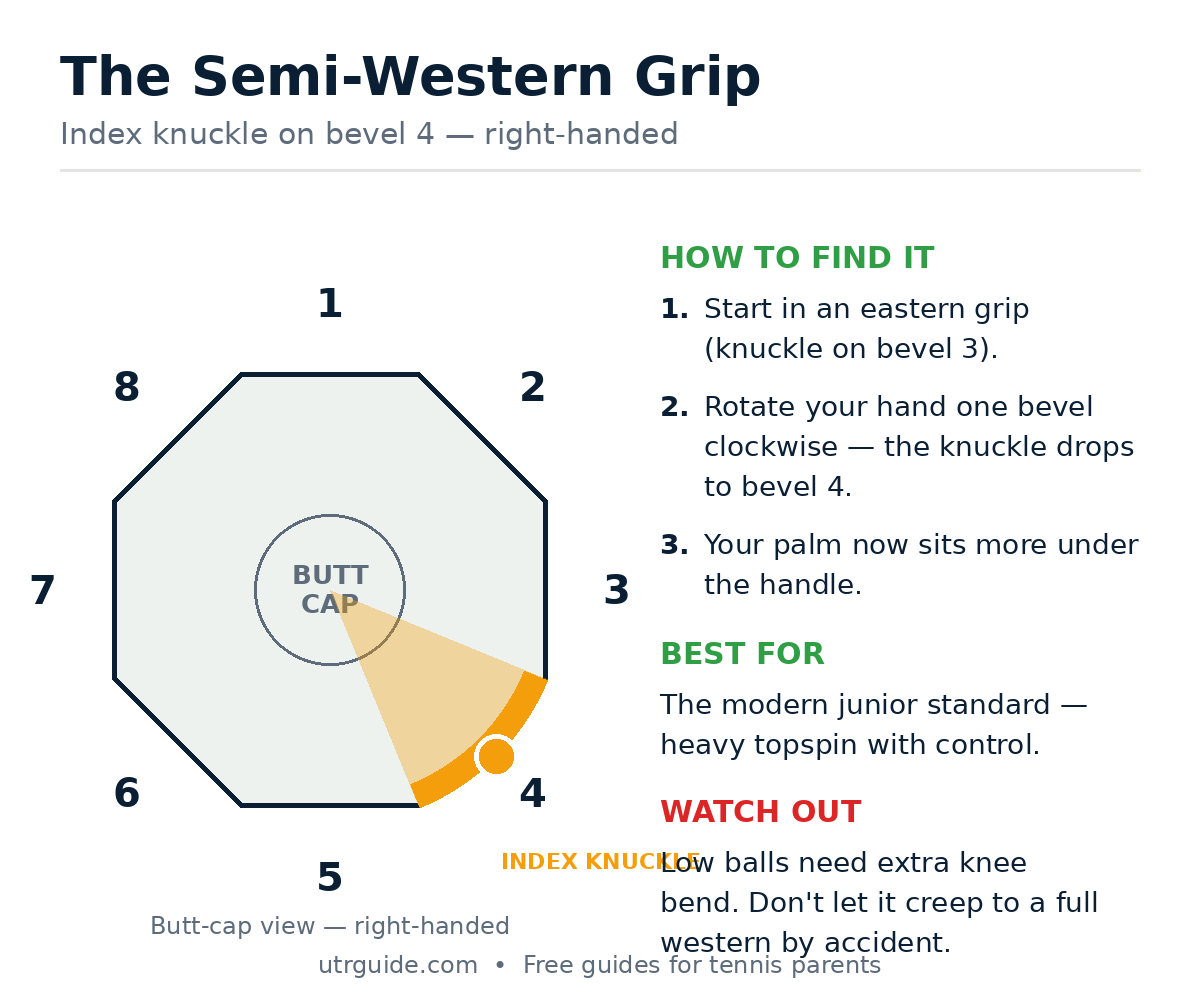
Knuckle on bevel 4 — Semi-western. The modern standard. Palm more under the handle, natural topspin. If your junior rallies with heavy shape, this is home.
Knuckle on bevel 5 — Western. Palm fully under the handle. Extreme topspin grip — great on high balls, a wrestling match on low ones.
The “in-between” problem
Sometimes the knuckle sits right on the ridge between two bevels. That’s normal — grips exist on a spectrum, and plenty of good players live between eastern and semi-western. What matters is the neighborhood, not the exact address. If it’s between 3 and 4, call it an eastern-leaning semi-western and move on.
Check it during play, not just in the living room
Here’s the parent trap: the grip looks perfect when your kid poses with it, then migrates two bevels mid-rally. Check the knuckle between points during practice. If the grip wanders under pressure, that’s actually the more useful discovery — it tells you the grip isn’t automatic yet, and it needs reps, not lectures. Be the wall: curious, not critical.
What if it’s the “wrong” grip?
First, make sure it’s actually wrong for the shot. A continental grip is correct for volleys and wrong for baseline topspin. If the forehand grip genuinely doesn’t fit your kid’s game, don’t overhaul it mid-season — that’s a conversation for their coach and the off-season. Small grip changes take weeks to feel normal, and mid-season changes usually cost matches before they win them.
Still not sure what you’re seeing? Upload a 10-second clip to our free Virtual Coach — the AI grip analyzer identifies the grip from the video and tells you if it fits the stroke.


Leave a Reply